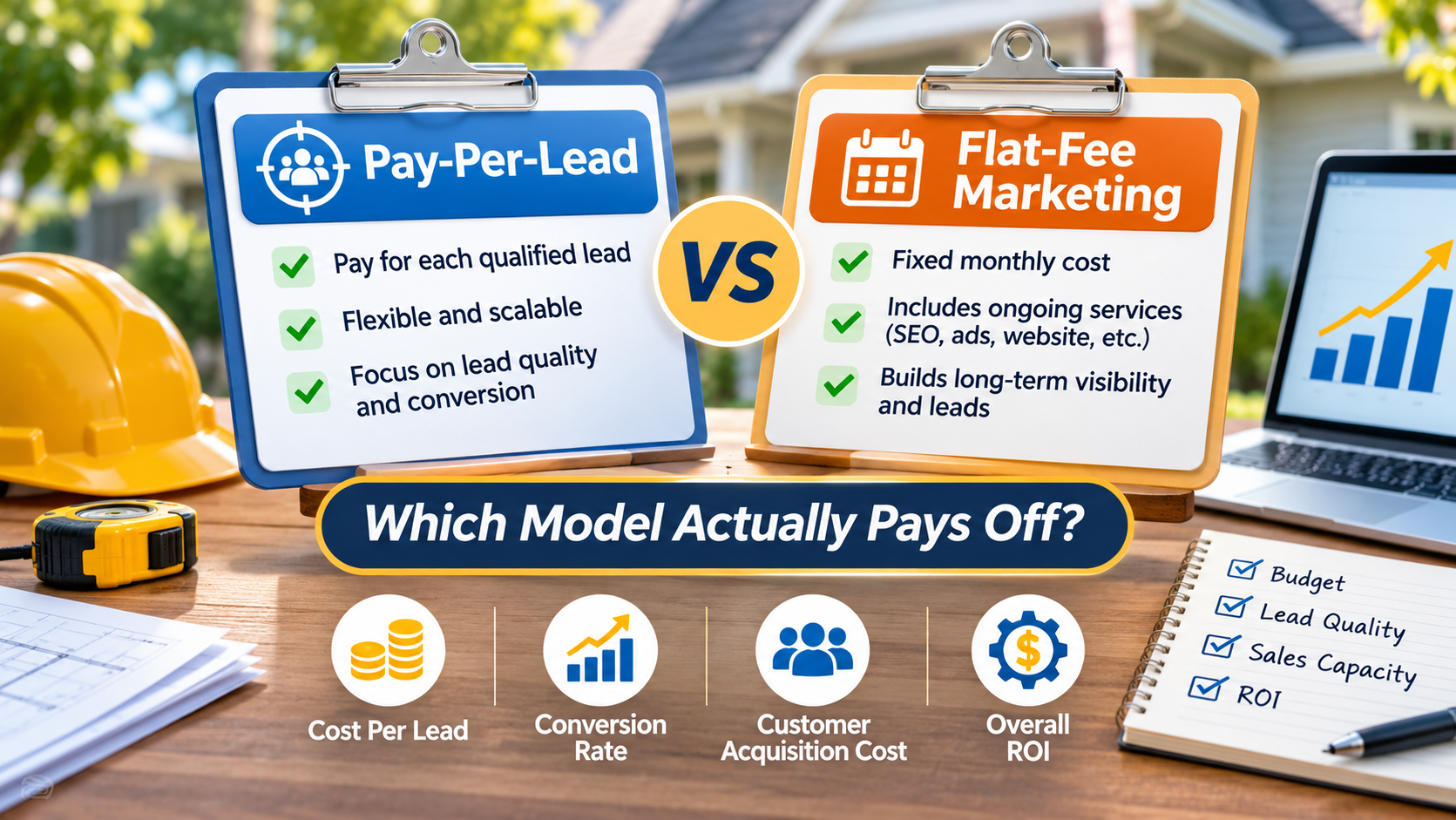
Choosing a marketing model affects how much a business spends to attract customers and how reliably it generates sales. Pay-per-lead services charge for each lead delivered, while flat-fee marketing covers an agreed scope of services for a fixed price. The better option depends on lead quality, conversion rates, and customer acquisition costs. Even AI search and Google Maps can influence how potential customers discover local service providers, making it important to consider where inquiries originate and how they translate into revenue.
How Pay-Per-Lead Marketing Works
Pay-per-lead marketing charges businesses for each prospect who meets specific criteria. Depending on the provider, a lead might be a phone inquiry, a completed contact form, or a request for a service estimate. Although businesses pay based on the leads delivered, they still need to assess whether those prospects are likely to become paying customers.
Before committing to a provider, review how the arrangement handles the following:
- Lead Qualification – Define what counts as a valid inquiry, including service requirements, location, and contact information.
- Duplicate Leads – Establish how the provider handles prospects who submit multiple inquiries or appear more than once.
- Pricing and Refunds – Confirm the cost per lead and the policy for invalid or unqualified inquiries.
Agreeing on these terms helps businesses avoid paying for duplicate, invalid, or unqualified leads.
How Flat-Fee Marketing Works
Flat-fee marketing involves paying a fixed amount for an agreed set of services, usually on a monthly basis. Unlike pay-per-lead arrangements, the payment stays the same regardless of how many inquiries the campaign generates.
This structure can help businesses plan their marketing budgets and invest in activities that support their broader marketing goals. However, a predictable fee does not guarantee strong performance. Companies should evaluate what their monthly payment covers and how the provider measures progress.
A flat-fee agreement may include services such as:
- Search Engine Optimization – Improve website visibility for relevant search terms and attract prospects actively looking for specific services.
- Advertising Management – Manage campaigns, monitor spending, and refine targeting based on performance.
- Website Improvements – Make service pages more useful and simplify the process of requesting a quote.
The value of these services depends on how well they attract qualified prospects and contribute to sales.
Which Model Delivers Better Returns?
The return on marketing spend depends on how much a business invests and how many leads become customers. Consider a contractor who invests $1,000 in marketing and receives 20 inquiries. If four prospects become customers, the marketing cost per acquired customer is $250.
Both pricing models could produce the same initial cost in this example, but their results may differ depending on lead quality and campaign performance. To compare them fairly, businesses should track the following metrics:
- Cost Per Lead – Calculate how much each qualified inquiry costs.
- Customer Acquisition Cost – Divide marketing expenses by the number of customers acquired.
- Conversion Rate – Assess how effectively leads turn into real customers.
- Revenue Per Customer – Assess how much revenue each acquired customer generates and whether it justifies the acquisition cost.
Businesses considering exclusive leads should also check whether inquiries are genuinely reserved for a single provider. Exclusivity may reduce direct competition for a prospect, but it does not guarantee that the person will book a service.
Which Model Fits Your Business?
The right choice depends on sales capacity, budget, and the time needed to convert inquiries into paying customers. Consider the following factors before deciding:
- Choose Pay-Per-Lead – If you want to pay according to inquiry volume and can verify lead quality before calculating returns.
- Choose Flat-Fee Marketing – If you need a predictable budget for ongoing marketing activities and have clear performance targets.
For companies purchasing contractor leads, profitability also depends on average job value and local competition. A more expensive lead may still generate a better return if it results in a profitable project.
Make Your Next Marketing Investment Count With HomeGuru
Choosing between pay-per-lead and flat-fee marketing comes down to how well each model supports your business goals and contributes to revenue growth.
At HomeGuru, we help contractors connect with high-quality, verified home improvement leads that match their services and service areas. Reaching homeowners who are actively looking for professional help can help you focus your marketing efforts on prospects with genuine project needs.
Visit HomeGuru to explore how targeted lead generation can help you attract potential customers, secure more projects, and get more value from your marketing budget.